Mastering Visual Flow: A Guide to the Curved Line Collection for Modern Design
In the world of graphic design, lines are rarely just boundaries. They are pathways that guide the eye, create rhythm, and establish emotional tone. Among the various types of linework, curved lines hold a special place. Unlike rigid straight edges, curves suggest movement, organic growth, and fluidity. For designers, marketers, and creative professionals, integrating these elements effectively can transform a static layout into a dynamic visual experience. This is where a comprehensive resource like the Curved Line Collection becomes an invaluable asset.
This article explores the significance of curved aesthetics in design, how they influence user perception, and why having a versatile library of dotted and solid curved icons is essential for modern business and creative projects. We will also examine the technical specifications that make such a collection practical for high-quality output.
The Psychology and Purpose of Curved Lines
To understand why you need a dedicated collection of curved elements, we must first look at how humans perceive shapes. In design psychology, straight lines often convey stability, order, and strength. However, they can sometimes feel cold or industrial. Curved lines, by contrast, are associated with comfort, safety, and natural beauty. Think of the horizon, the arc of a rainbow, or the winding path of a river. These forms are inherently pleasing to the human eye because they mimic the organic world.
When used in business designs, curved lines soften the corporate image. They make brands appear more approachable and customer-friendly. For instance, a tech company might use sharp angles to show precision, but a wellness brand will almost exclusively use soft curves to evoke relaxation. The Curved Line Collection allows designers to tap into this psychological effect instantly. Whether you are creating a logo, a website header, or a social media post, these elements help bridge the gap between information and emotion.
Dotted vs. Solid: Understanding the Variations
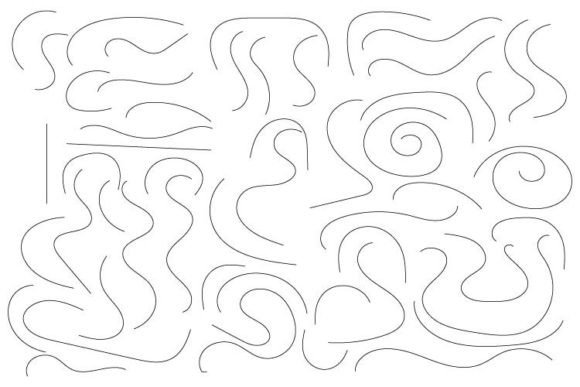
Not all curves are created equal. The collection highlights two distinct styles: dotted and beautiful unique solid lines. Each serves a different functional purpose in visual communication.
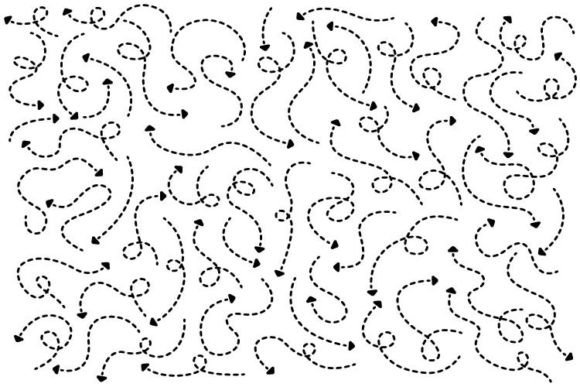
- Dotted Curves: These suggest motion, progression, or a journey. They are excellent for illustrating processes, timelines, or connections between ideas without creating a heavy visual barrier. A dotted line implies that something is continuing beyond the frame, inviting the viewer to imagine the rest of the story.
- Solid Unique Curves: These provide structure and emphasis. They act as elegant dividers or frames that highlight specific content. Their "unique" nature ensures that your design does not look like a generic template, adding a bespoke feel to your projects.
By combining these styles, designers can create hierarchy. A solid curve might frame a headline, while a dotted curve leads the eye toward a call-to-action button. This interplay creates a balanced composition that is both informative and aesthetically engaging.
Practical Applications in Business and Creativity
The versatility of the Curved Line Collection makes it suitable for a wide array of industries. Let us explore how these assets fit into daily professional activities.
- Brand Identity and Logos: Many successful brands use curves to appear friendly and innovative. Having access to 260 unique designs means you can find a shape that aligns perfectly with your brand’s voice without starting from scratch.
- Presentation Decks: Corporate presentations often suffer from "wall of text" syndrome. Using curved dividers and decorative elements breaks up content, making it easier for audiences to digest complex information.
- Web and UI Design: In user interface design, curved lines are used to separate sections gently. They guide the user’s scroll behavior and create a seamless flow from one section of a landing page to another.
- Educational Materials: Teachers and instructional designers can use dotted curves to map out learning paths or connect related concepts in diagrams, making abstract ideas more concrete.
The key advantage here is efficiency. Instead of spending hours drawing perfect bezier curves in vector software, professionals can drag and drop pre-made, high-quality assets. This allows more time to focus on strategy and messaging rather than manual execution.
Technical Excellence: Why File Formats Matter
While aesthetic appeal is crucial, the technical quality of design assets determines their usability across different platforms. A common misunderstanding among beginners is that any image file will work for any project. In reality, choosing the right format is critical for maintaining professionalism.
The Curved Line Collection addresses this by providing a comprehensive suite of file types, ensuring compatibility with both print and digital media.
High-Resolution Raster Files (PNG and JPG)
The collection includes 260 PNG files at 300 DPI. DPI (dots per inch) is a measure of printing resolution. At 300 DPI, these images are sharp enough for high-quality print materials such as brochures, business cards, and flyers. PNGs are particularly useful because they support transparency, allowing you to place the curved lines over any background color or image without a white box appearing around them.
Additionally, the set includes 2 JPG files containing all designs. JPGs are ideal for quick previews or web-based sharing where file size needs to be smaller, though they do not support transparency.
Scalable Vector Graphics (SVG, EPS, AI)
For professional designers, vector files are non-negotiable. The collection provides 260 SVG files, 2 EPS files, and 1 AI file. Unlike raster images (PNG/JPG), vectors are based on mathematical equations rather than pixels. This means you can scale a curved line from the size of a postage stamp to the size of a billboard without any loss of quality.
- SVG (Scalable Vector Graphics): Perfect for web development. SVGs are code-based, meaning they load quickly and remain crisp on retina displays and mobile devices.
- EPS and AI: These are industry-standard formats for Adobe Illustrator and other professional design software. They allow for full editability. You can change the color, stroke width, or shape of the curves to match your specific brand guidelines exactly.
Having both vertical and horizontal orientations included in the SVG and PNG sets further enhances flexibility. Designers do not need to rotate or manipulate the files extensively, preserving the integrity of the original design intent.
Building a Broader Design Understanding
Integrating a tool like the Curved Line Collection is not just about saving time; it is about elevating the standard of your work. When you have access to high-quality, diverse assets, you are more likely to experiment. You might try layering a dotted curve over a solid one to create depth, or use a vertical curve to frame a testimonial quote.
Moreover, using consistent visual elements helps build brand recognition. If your business uses a specific style of curved divider across all social media posts, emails, and documents, it creates a cohesive visual identity. Customers begin to associate that smooth, flowing aesthetic with your brand’s values of ease and reliability.
It is also important to note that while these tools are powerful, they should be used with intention. Overusing decorative elements can clutter a design. The best practice is to use curves to support the content, not distract from it. Use them to lead the eye, separate sections, or add a touch of elegance, but always ensure the primary message remains clear.
Conclusion
The Curved Line Collection represents more than just a set of icons; it is a toolkit for better visual communication. By understanding the psychological impact of curves and leveraging the technical versatility of PNG, SVG, EPS, and AI formats, designers and business owners can create more engaging, professional, and effective materials. Whether you are a beginner looking to improve your presentation slides or an experienced designer seeking efficient assets for client work, this collection offers the breadth and quality needed to succeed in today’s visually driven world.
Embrace the flow. Let your designs breathe with the natural elegance of curved lines, and watch as your audience connects more deeply with your message.