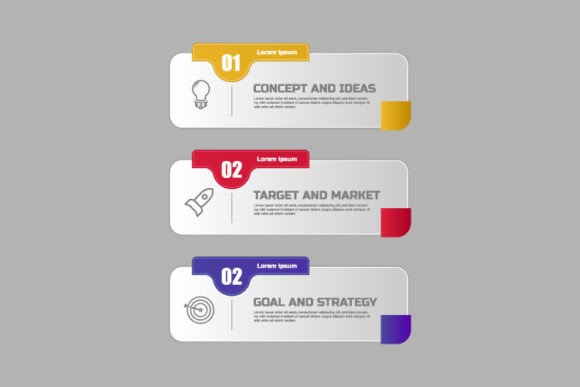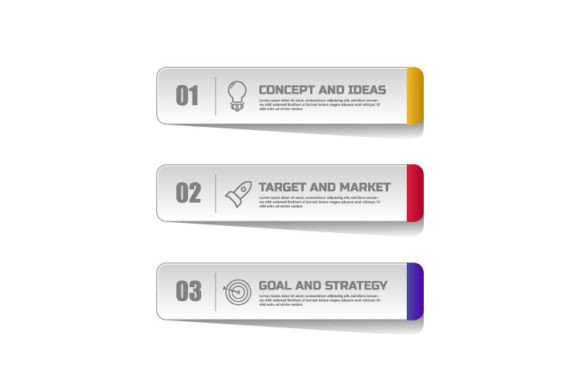
Creative Infographic Three Step Template: Streamlining Visual Communication for Print and Digital Design
Visual clutter is the enemy of effective communication. In a world where attention spans are shrinking, the ability to distill complex information into digestible, visually appealing chunks is not just a nice-to-have skill—it is a necessity. This is where the Creative Infographic Three Step Template becomes an indispensable asset for designers, marketers, educators, and business owners alike. By focusing on a tripartite structure, this design resource leverages the psychological principle that humans process information best in small, grouped sets.
Whether you are preparing a high-stakes corporate presentation, designing marketing collateral for a new product launch, or creating educational materials for students, having a reliable, professionally designed framework saves hours of layout work. The template is not merely a static image; it is a versatile foundation available in multiple formats—Ai, Eps, Png, Jpg, and Svg—ensuring compatibility with virtually any workflow, from professional vector editing software to quick social media updates.
Why the Three-Step Structure Works
The power of the three-step model lies in its simplicity and narrative flow. It mirrors the natural way we tell stories: beginning, middle, and end. Or, in a business context: problem, solution, result. When you use a Creative Infographic Three Step Template, you are tapping into a cognitive shortcut that helps your audience retain information without feeling overwhelmed.
Consider the alternative. A five-step or ten-step process often requires dense text and complex arrows, leading to visual fatigue. A two-step process can sometimes feel incomplete or binary. Three steps strike the perfect balance, offering enough depth to explain a concept while maintaining brevity. This makes the template ideal for explaining workflows, timelines, hierarchical structures, or comparative analyses.
Real-World Applications Across Industries
The versatility of this template means it transcends specific industries. Here is how different professionals can leverage this resource in practical scenarios.
Marketing and Brand Strategy
For digital marketers, clarity converts. Imagine you are launching a new SaaS product. You need to explain how it works on a landing page without forcing visitors to read a manual. Using the Creative Infographic Three Step Template, you can visualize the user journey: Sign Up, Configure, Launch. Because the files include high-resolution Png and Jpg formats, you can drop these directly into email newsletters, blog posts, or social media carousels without worrying about pixelation or layout shifts.
Furthermore, the Svg format allows web developers to embed the infographic directly into code, ensuring it scales perfectly on mobile devices. This responsiveness is crucial for modern SEO and user experience metrics.
Corporate Training and Human Resources
HR departments frequently struggle to make onboarding processes engaging. Instead of handing new hires a forty-page PDF, imagine providing them with a visually striking one-pager that outlines their first month: Week 1: Orientation, Week 2: Team Integration, Week 3: Project Assignment. The editable Ai and Eps files allow internal design teams to customize colors to match company branding strictly, ensuring consistency across all internal communications.
This approach reduces anxiety for new employees by providing a clear roadmap. It transforms abstract expectations into concrete, manageable milestones.
Educational Content and E-Learning
Educators and course creators know that retention drops when content is too dense. A history teacher might use the template to break down the causes of a historical event into three primary factors. An online fitness coach could use it to illustrate a workout routine: Warm-up, Main Set, Cool-down. The clean lines and modern aesthetic of the template keep learners focused on the content rather than distracted by poor design.
Since the template includes vector formats like Eps and Ai, educators who have access to design software can easily swap out icons or adjust text sizes to accommodate different learning levels or languages.
Navigating File Formats for Maximum Utility
One of the strongest advantages of this specific resource package is the inclusion of five distinct file types. Understanding when to use each ensures you get the most value out of your purchase.
- Ai (Adobe Illustrator): Best for professional designers who need full control over every anchor point, color gradient, and font choice. This is the source file for deep customization.
- Eps (Encapsulated PostScript): Ideal for users who do not have Adobe Illustrator but use other vector-based programs like CorelDRAW or Affinity Designer. It maintains scalability without loss of quality.
- Svg (Scalable Vector Graphics): The gold standard for web use. It keeps file sizes small while allowing infinite scaling, making it perfect for responsive websites and apps.
- Png (Portable Network Graphics): Use this for digital presentations, social media, or documents where you need a transparent background. It supports high quality but is raster-based, so avoid enlarging it beyond its original dimensions.
- Jpg (Joint Photographic Experts Group): Best for quick previews, email attachments, or platforms that do not support transparency. It is universally compatible but lacks the crispness of vector formats for print.
Design Considerations and Best Practices
While the Creative Infographic Three Step Template provides a strong structural foundation, successful implementation depends on how you populate it. Here are some practical considerations to keep in mind.
Keep Text Concise: The template is designed for brevity. If you find yourself writing paragraphs in each step, you are likely overcomplicating the message. Aim for headlines and short supporting sentences. Let the visual elements do the heavy lifting.
Maintain Visual Hierarchy: Even within a three-step structure, one step may be more critical than the others. Use size, color intensity, or icon complexity to guide the viewer’s eye to the most important information. The editable nature of the Ai and Eps files makes this adjustment straightforward.
Color Psychology: Do not just pick colors because they look nice. Consider the emotional response you want to evoke. Blue conveys trust and stability, ideal for financial services. Orange suggests energy and creativity, suitable for startups or creative agencies. Ensure your chosen palette aligns with your brand identity.
Potential Limitations and How to Overcome Them
No tool is a magic bullet. The primary limitation of a three-step template is its rigidity. Not every process fits neatly into three parts. If your process has four distinct phases, forcing it into three steps can lead to confusion or omitted details. In such cases, consider combining two related steps into one broader category, or look for a four-step variant if available.
Additionally, while the vector files offer great flexibility, they require a certain level of technical proficiency to edit effectively. Users unfamiliar with vector software may find the Ai and Eps files intimidating. For these users, sticking to the Png or Jpg versions and using basic image editors to overlay text is a viable, albeit less flexible, workaround.
Ultimately, the Creative Infographic Three Step Template is more than just a graphic element; it is a communication tool. By providing a structured, aesthetically pleasing way to present sequential information, it helps bridge the gap between complex ideas and audience understanding. Whether you are decorating a report, designing a background for a video, or creating a standalone print piece, this template offers the professional polish needed to make your message resonate.